A Common Misunderstanding
If you spend enough time around Reiki, you begin to notice something. People describe it in different ways. It is called a healing method, a way to develop intuition, or a spiritual practice. Each of these descriptions points to something real, but none of them fully answers a more basic question. What is Reiki for?
In modern practice, Reiki is usually approached as something we use to help others. We learn hand positions, techniques, and ways to direct a session. The focus naturally moves toward results. Helping others becomes the center of the practice.
Where Usui Began
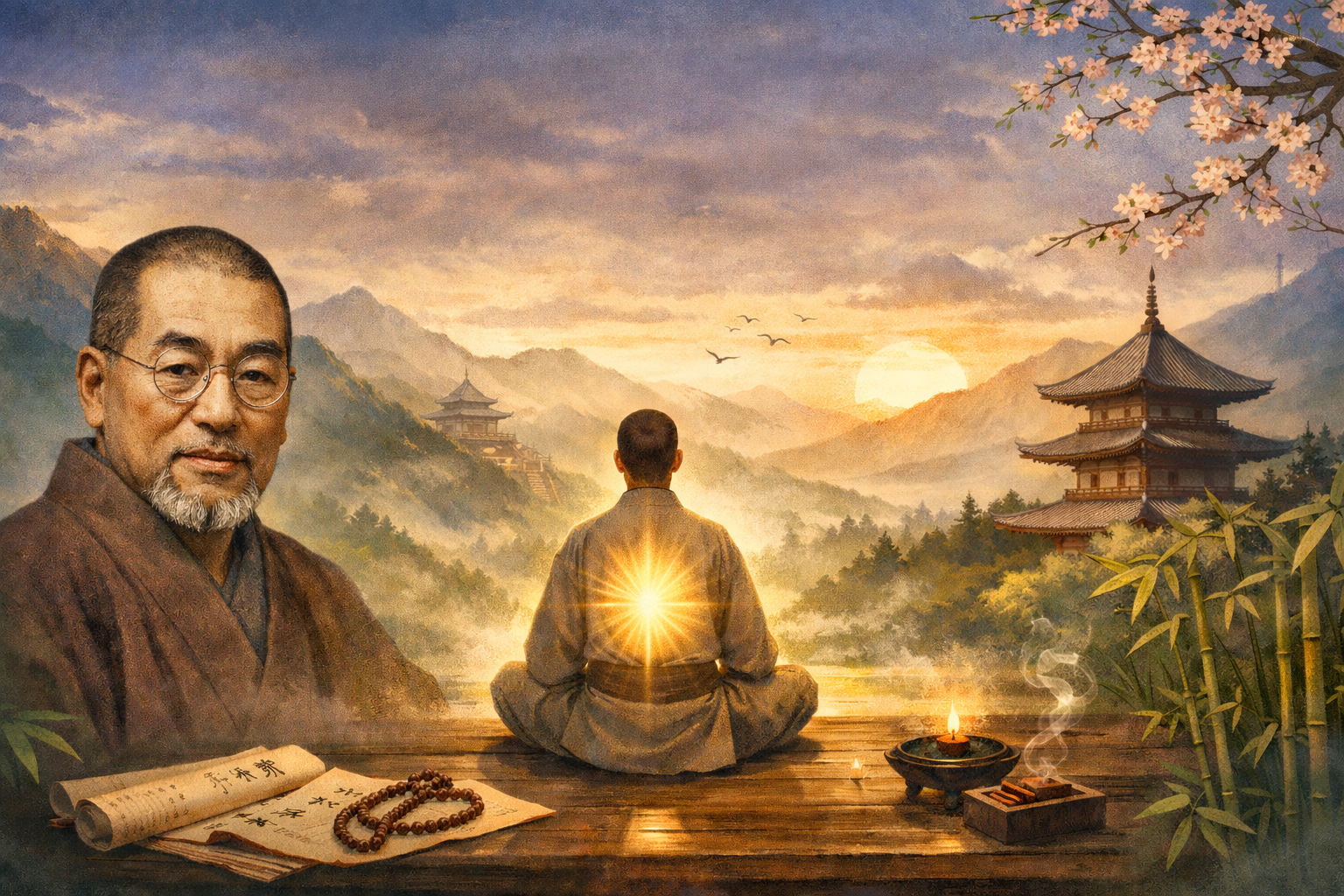
If we look more closely at how Reiki was originally taught, a different emphasis begins to appear. Usui did not begin with helping others. He began with the practitioner.
Usui’s own written instruction makes this clear. In the Kyogi, written in 1926 and signed in his name, the practice is presented not as a philosophy, but as a method to be carried out directly. The emphasis is on training the mind and conduct through daily repetition, not on achieving results.
Usui states the purpose of this training simply:
“The purpose is to improve the mind and body.”
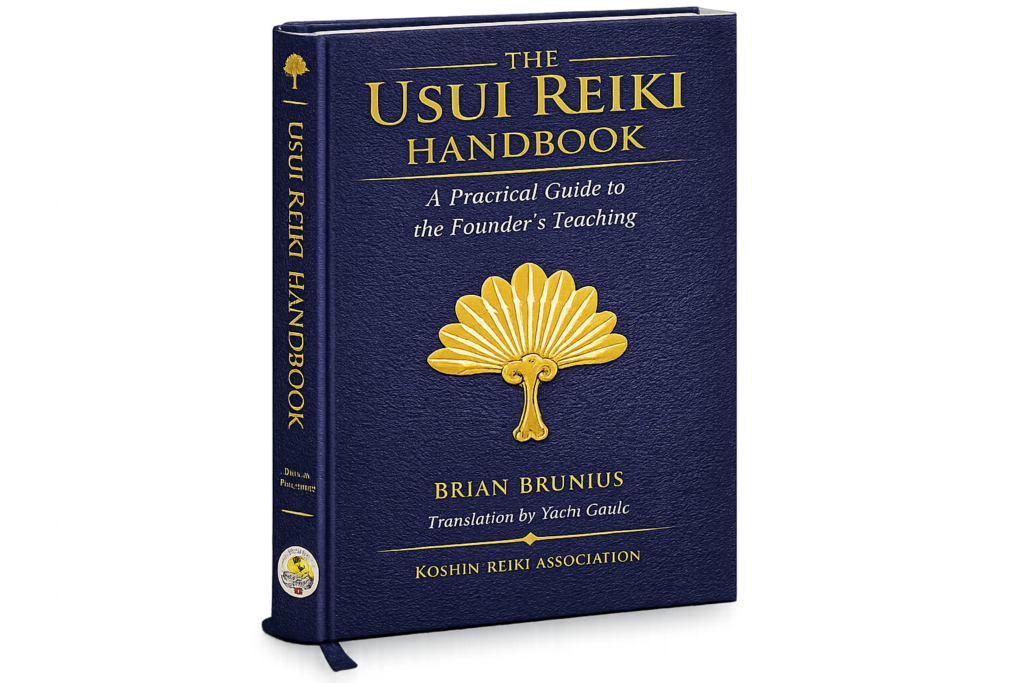
This statement can be read in full in The Usui Reiki Handbook, where the original teaching materials, including the Kyogi, are presented in English translation.
His students were given a small number of practices that they returned to every day. These included the Reiki Precepts, Reiki meditation, gyosei contemplation, and self-treatment. These were not presented as secondary or optional. They were the training itself.
At first, this can feel unfamiliar. Many people come to Reiki wanting to learn how to treat others. In early training, the attention is placed somewhere else. It is placed on the condition of the practitioner.
Training the Practitioner
When the mind is unsettled, treatment becomes unsettled. When attention is scattered, the hands become inconsistent. When the body is tense, Reiki does not flow as clearly. Usui’s approach was direct. Rather than trying to improve treatment, he trained the person who was doing the treatment.
The Reiki Precepts begin this work in a very simple way. When anger arises, attention is pulled into the past. When worry arises, attention moves into the future. The Precepts return attention to the present moment. This is done repeatedly, throughout the day, until the mind begins to settle.
Reiki meditation continues this training. The purpose is not to produce an experience, but to stabilize the body and allow attention to gather. Over time, the breath deepens, the lower body becomes steady, and the practitioner interferes less with what is happening.
Self-treatment brings this into direct contact. The hands are placed on the body each day. There is no need to achieve anything. Through repetition, sensitivity develops and the relationship to the practice begins to change. Understanding does not come from explanation. It comes from contact.
This structure, where daily self-practice forms the foundation of training, is shown in full in The Usui Reiki Handbook, where the practices are presented together as a complete system rather than as separate techniques.
In this way, Reiki practice begins to reorganize how the practitioner meets each moment. The changes are not dramatic at first. They appear in small ways. Attention returns more easily. The body settles more quickly. Reactions begin to soften. Over time, these small changes accumulate into something stable.
How Helping Others Develops
Helping others is not separate from this. It is not removed from the system. But it is not the starting point. It emerges naturally as the practitioner becomes more stable.
When the inner condition steadies, treatment steadies. The hands remain where they are needed. Attention does not move as quickly. The practitioner interferes less.
Nothing additional needs to be added.
This is often overlooked because Reiki is usually presented as a method for healing others. From the outside, that is what it appears to be. From the inside, it functions differently. It is a way of training the practitioner so that treatment can occur more directly.
Returning to Practice
This is something that can be observed directly. As practice becomes consistent, the mind changes. Attention becomes more stable. The body becomes more settled. Treatment begins to feel different, not because something new has been added, but because something unnecessary has begun to fall away.
The structure described here is presented in The Usui Reiki Handbook, where the Kyogi and other original materials are shown together with the practices they support.
For now, return to something simple. Place your hands on your body. Notice your breath. Return to the Precepts. Let practice show you what Reiki is for.
Continue the Exploration
Go deeper into Reiki as it is practiced, trained, and lived over time in Living with Reiki.
This is where the system is understood through direct experience, not explanation, and where daily practice becomes the path.
👉 Subscribe on Substack.