Koshin Reiki Association Books
The Koshin Reiki Association publishes works that support historically grounded understanding, disciplined practice, and responsible transmission of Reiki. These publications are not manuals, certifications, or technique-based guides. They are reference texts intended to clarify practice, preserve source materials, and support long-term engagement with Reiki as a path of cultivation rather than a system of methods.
Foundational Texts
These works present the broader framework of Reiki as a complete system of training, along with key source materials that clarify its original purpose and development.
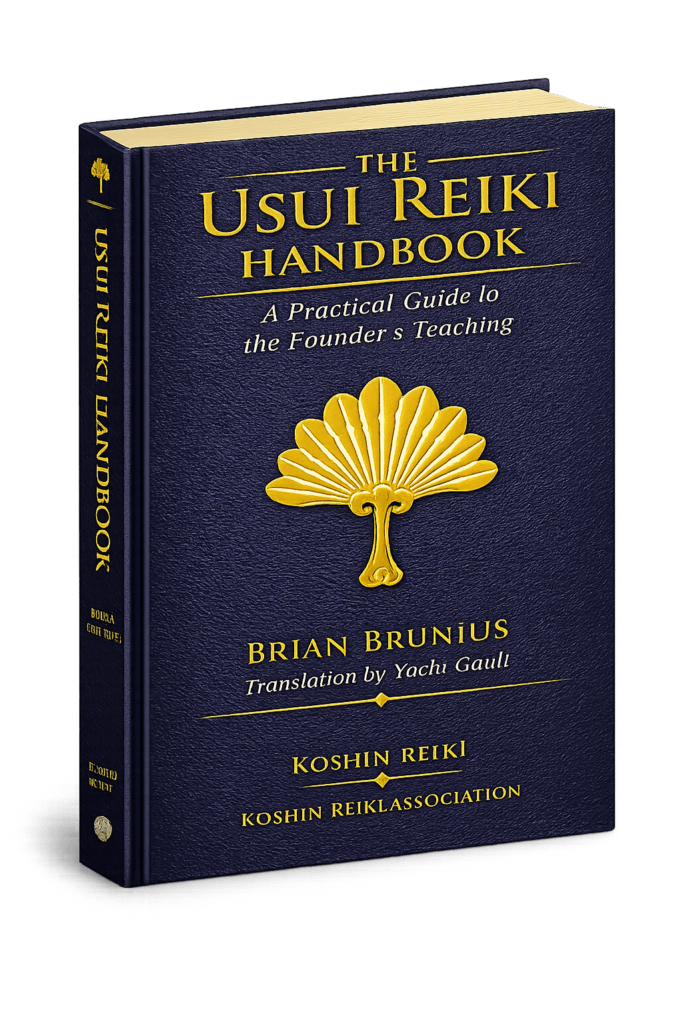
The Usui Reiki Handbook
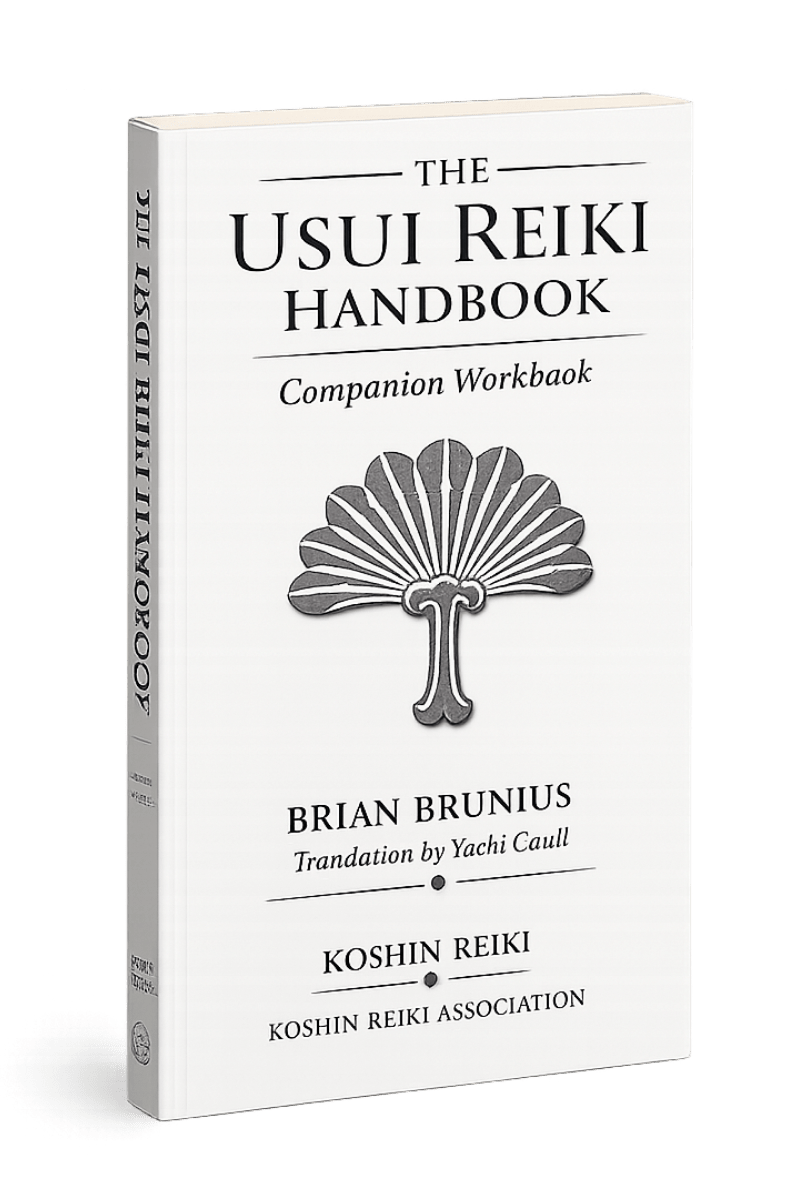
The Usui Reiki Handbook: Companion Workbook
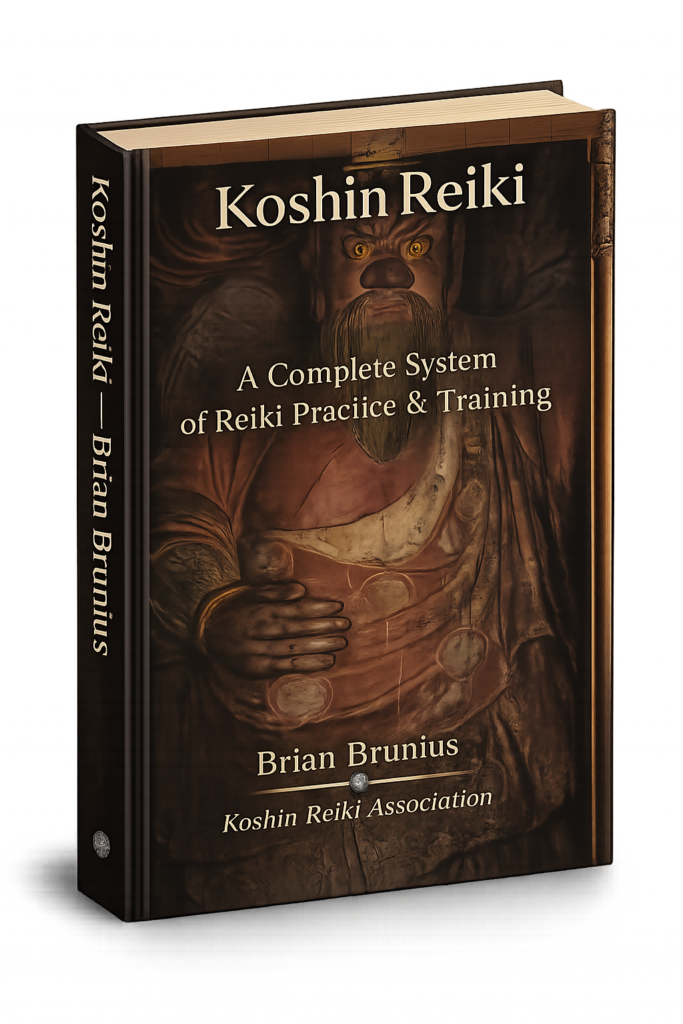
Koshin Reiki: A Complete System of Reiki Practice & Training
Koshin Reiki: A Complete System of Reiki Practice & Training is a transmission-level text based on the way Reiki was taught within a direct lineage from Mikao Usui, Chujiro Hayashi, Hawayo Takata and John Harvey Gray.
It does not focus on theory, belief, or interpretation. It shows how Reiki is practiced, developed, and stabilized through direct experience, repetition, and guidance from a teacher.
This is not a general introduction.
It is a structured presentation of how Reiki actually works as a method of training.
The Right-Minded Reiki Instructional Series
This is a collection of focused volumes presenting the core disciplines of Reiki training as a system of self-cultivation.
The material is drawn from The Usui Reiki Handbook and historical Reiki sources, including Kaiji Tomita’s Reiki and the Benevolent Art of Healing, with direct quotations used where appropriate.
Each volume takes up a single discipline—such as the Precepts, Reiki meditation, or waka contemplation—and presents it as a method for training and refining kokoro, the integrated condition of a person as expressed through thought, feeling, intention, and conduct, through which Reiki functions.
These books are not read once. They are returned to in practice. Through repetition, the practitioner develops stability, clarity, and direct familiarity with their own condition.
Taken together, the series restores Reiki as a disciplined process of cultivation rather than a collection of techniques.
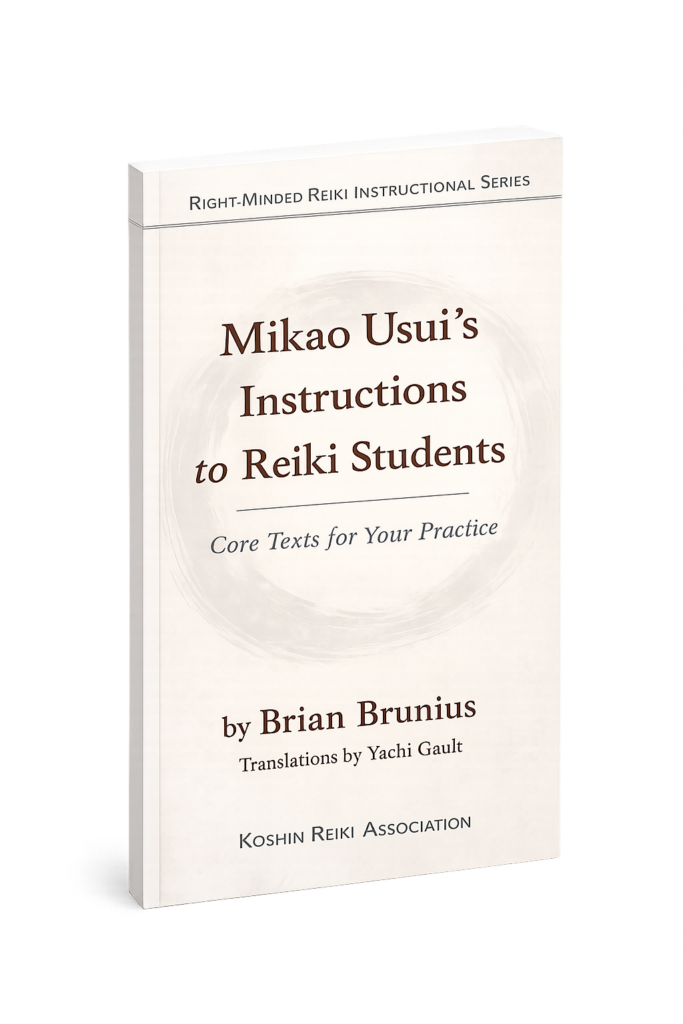
Mikao Usui's Instructions to Reiki Students
This book presents the only complete English language translation of Kokai Denju Setsumei, one of the four instructional texts written by Reiki’s founder, Mikao Usui. Published in January 1926, this document has been kept private for a century, available only to members of the Usui Reiki Ryoho Gakkai.
In it, Usui explains why he created his Reiki system and what it was intended to train. It shows that Reiki was not designed primarily as a healing method, but as a disciplined path for cultivating the heart-mind (kokoro) and restoring unity between spirit and body. Everything in later Reiki culture grows out of, or departs from, this original purpose.
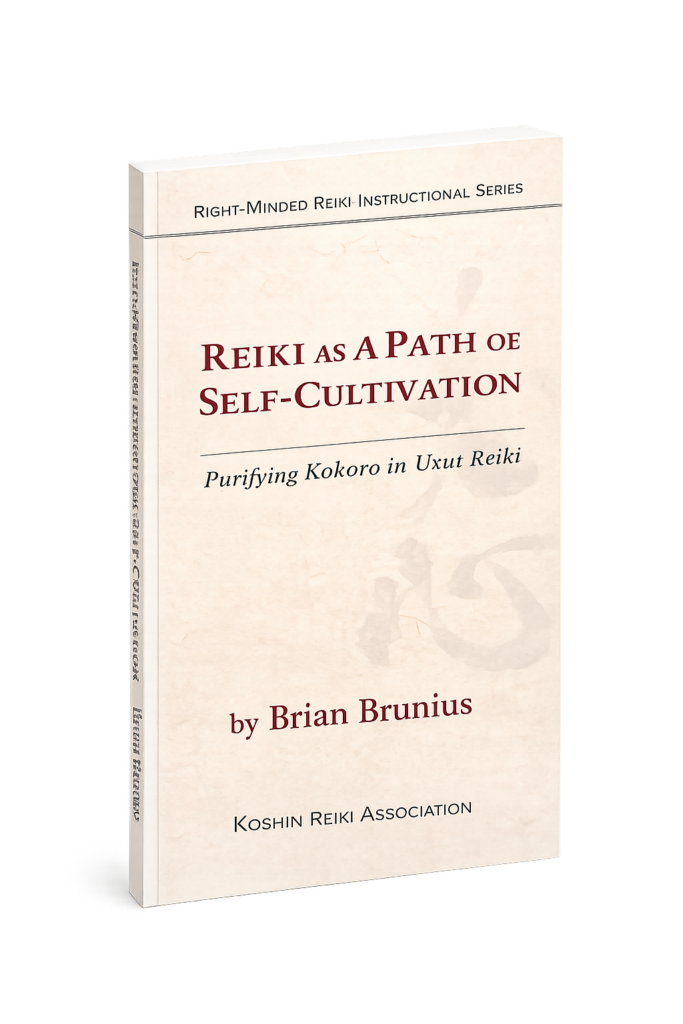
Reiki as A Path of Self-Cultivation
This book clarifies that Reiki, as Mikao Usui understood it, is a system for forming the practitioner rather than a method for producing effects. It shows that practices such as reiju, the Precepts, meditation, poetry contemplation, and self-treatment exist to purify kokoro so that Reiki can function without interference. Healing arises not from technique or intention, but from the steadiness and ethical condition of the person who practices. In doing so, the book corrects the modern habit of treating Reiki as something one uses, restoring it as a path one must actually live.
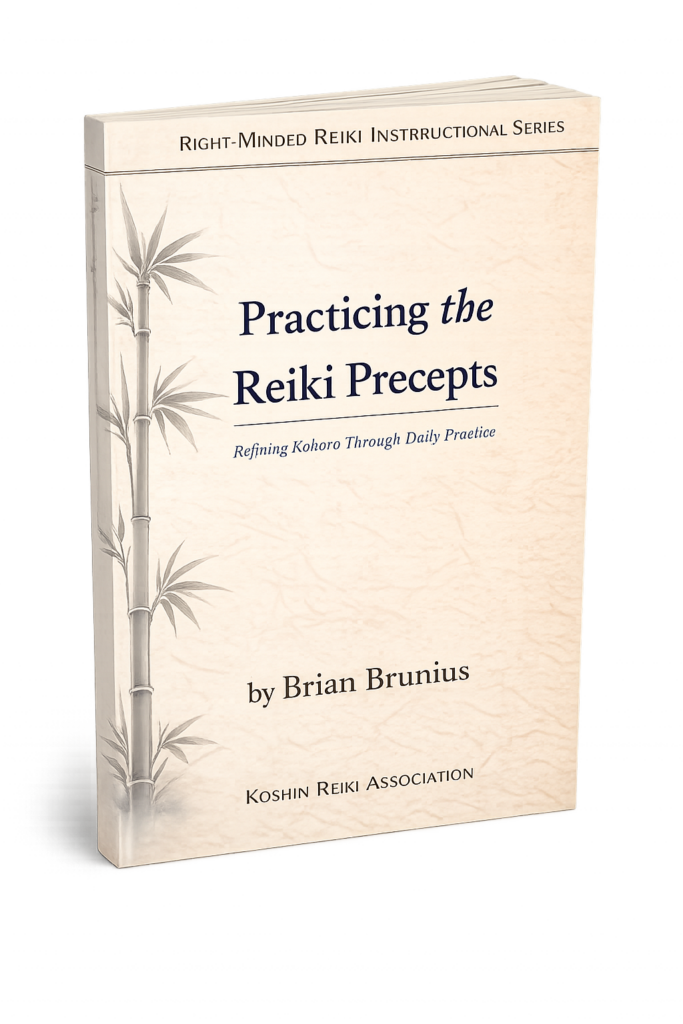
Practicing the Reiki Precepts
Practicing the Reiki Precepts restores the complete, signed teaching of Mikao Usui’s Precepts as they were presented in 1920s Reiki training. This chapbook places the original document within its historical Taisho-era context and shows the Precepts not as inspirational slogans, but as disciplined, lived tools for refining kokoro — the integrated heart-mind. Through careful historical framing and disciplined analysis, this volume reveals how the Precepts function as conditioning tools within the structure of early Reiki education: repeated recitation, daily self-treatment, ethical refinement, and contemplative practice. The book is an essential foundation for serious practitioners who wish to understand and work with the Precepts as part of sustained, authentic Reiki cultivation.
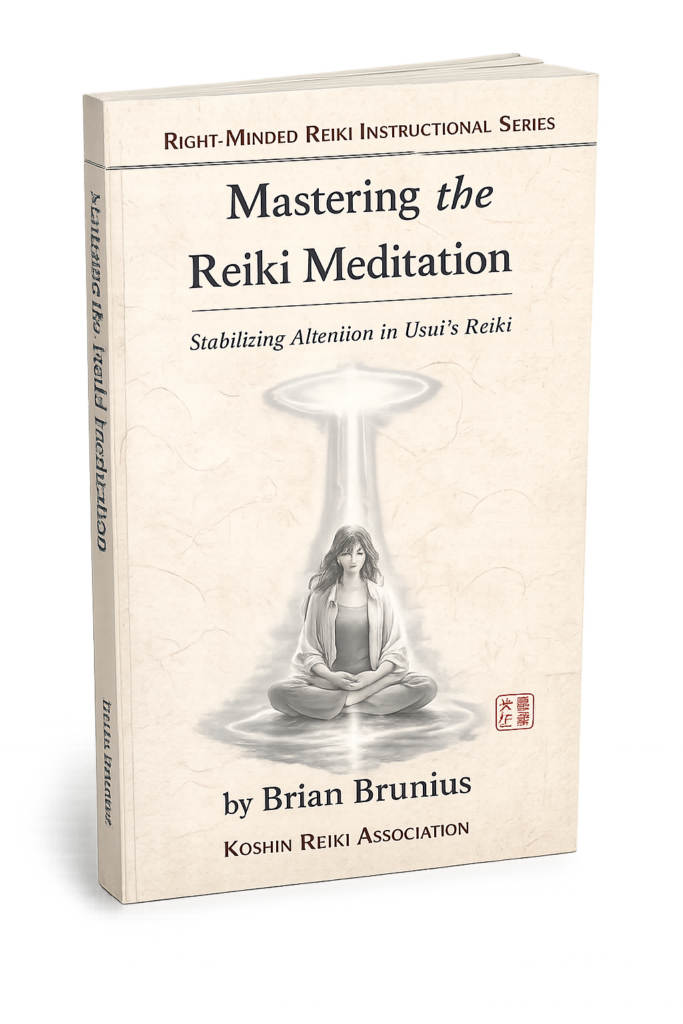
Mastering the Reiki Meditation
Mastering the Reiki Meditation presents Reiki meditation as it functioned in early 1920s Reiki training, not as relaxation or visualization, but as a disciplined method for stabilizing the body so Reiki can be received without interference. This book places meditation within its original training context and shows it not as a secondary or optional practice, but as a primary method for refining kokoro through repeated descent of the Reiki light. Through clear structure and direct instruction, this volume demonstrates how attention, breath, and posture are engaged to dissolve obstruction and stabilize the seika tanden as a center of steadiness. The book is an essential foundation for serious practitioners who wish to understand and embody Reiki meditation as part of sustained, authentic Reiki cultivation.
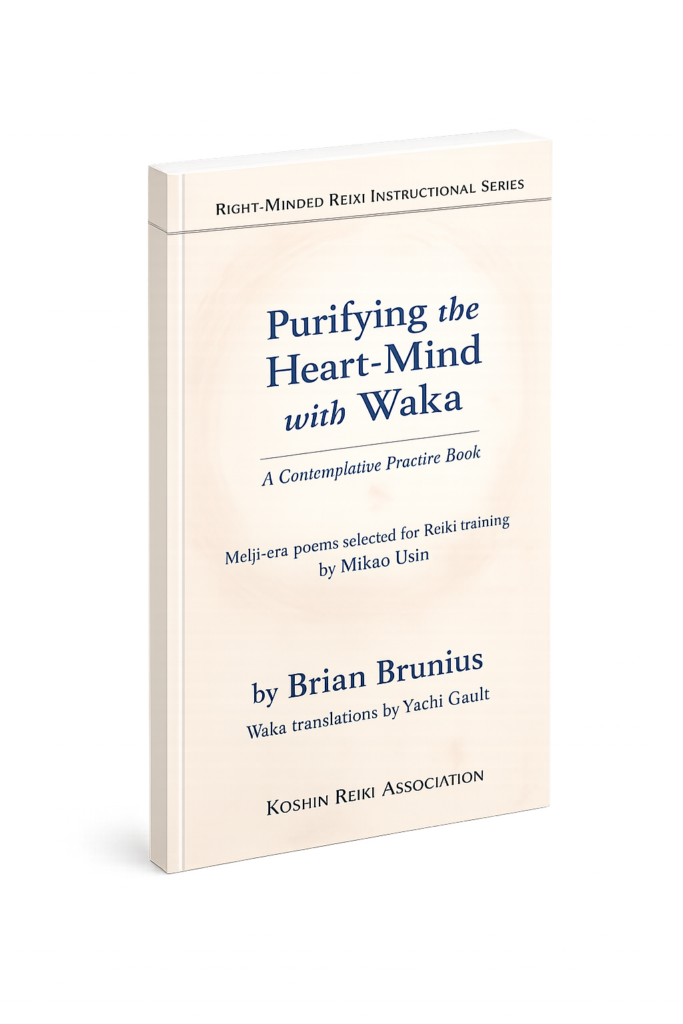
Purifying the Heart-Mind with Waka
This book presents many of the waka poems Mikao Usui selected for Reiki training as a disciplined contemplative practice for purifying kokoro, not as literature to be analyzed or explained. It shows that these poems were used through repetition and quiet contact to refine attention, restraint, and ethical clarity over time. Rather than offering interpretation or instruction, the book preserves the original training function of the poems by giving them space to work directly on the practitioner. In doing so, it restores waka contemplation as a living practice of self-cultivation rather than a source of meaning or insight to be extracted.
Forthcoming in 2026
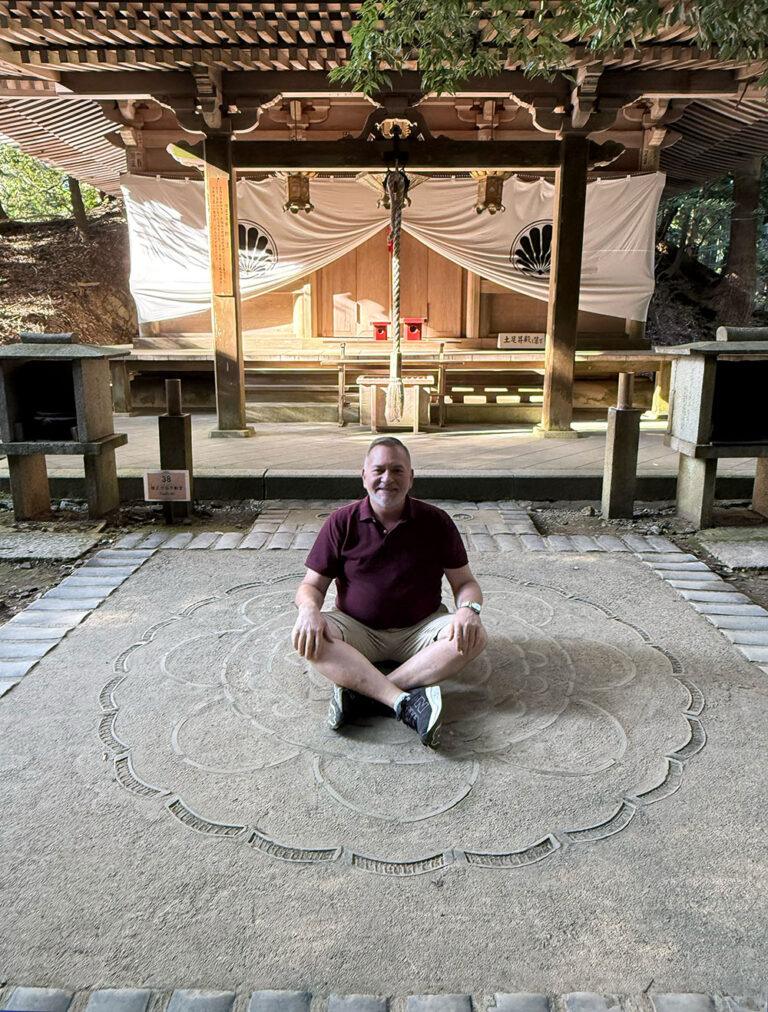
Mount Kurama: A Walkable Mandala
Pilgrimage, Practice, and the Roots of Reiki
This book presents Mount Kurama not as a location to be visited, but as a path to be walked.
Following a group of Reiki practitioners on pilgrimage in Kyoto, the narrative unfolds through the actual ascent of the mountain. As the group moves from the city into forest, through temples, shrines, and hidden paths, the structure of Kurama gradually reveals itself as a mandala shaped through movement, effort, and attention. Teaching arises only as each place is encountered, allowing the mountain’s religious history, symbolic layers, and connection to Reiki to emerge through direct experience rather than explanation.
At the center of the journey, nothing dramatic occurs. The climb continues, the forest deepens, and the search for meaning begins to fall away. What remains is a steady condition of presence shaped by repetition, contact, and shared experience.
Based on real pilgrimage work on Mount Kurama, this book presents Reiki not as a system of ideas, but as something that develops through walking, sitting, and returning again to the same path.