
In Usui Sensei’s, Shinshin Kaizen Usui Reiki Ryoho — “Usui Reiki Healing Method for the Improvement of Mind and Body”( I心身改善臼井靈氣療法) — there are practices that feel like they cut straight to the heart of what this work is really about. Reiji-ho is one of them. The name itself (霊示法) translates roughly to “the method of spiritual indication” or “guidance by the spirit.” It’s simple in concept but profound in practice: instead of relying solely on a set sequence of hand positions, you invite Reiki to guide your hands directly to where healing is needed most.
This isn’t about forcing intuition or trying to “figure things out.” It’s more about getting out of the way. You center yourself, ask quietly for direction, and then allow the energy to move you. The hands might drift, hover, or settle somewhere unexpected. Sometimes there’s a subtle pull, a warmth that draws attention, or just a quiet inner knowing. Whatever form it takes, the message is clear: Reiki knows where to go.
Roots in the Lineage
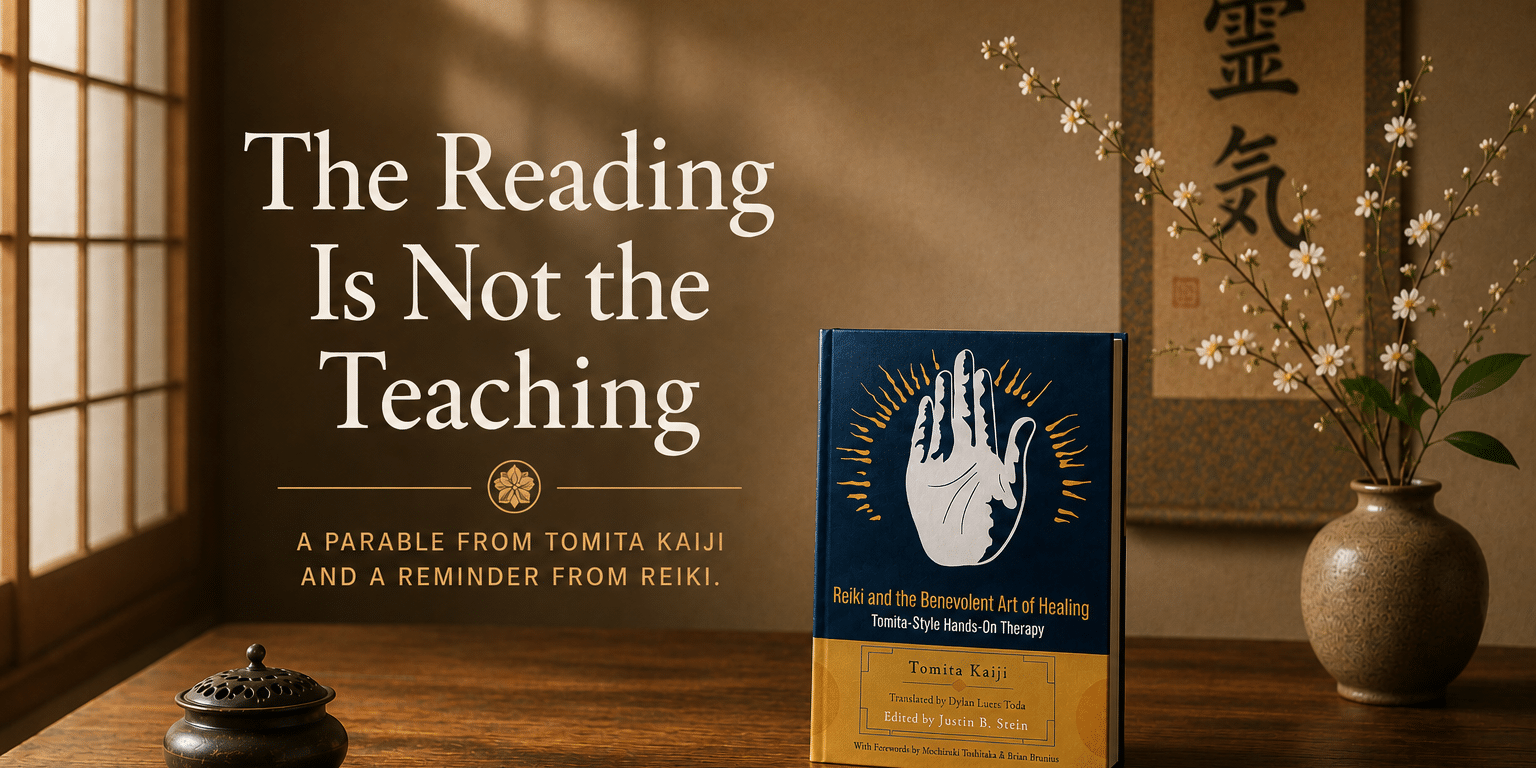
When you look back through the early records, Reiji-ho appears as part of the advanced teachings Usui Sensei passed along. Kaiji Tomita, who studied directly with Usui in the 1920s, wrote about Reiki as a living, responsive practice in his 1933 book, Reiki to Jinjutsu: Tomita-ryū Teate Ryōhō (Reiki and the Benevolent Art of Healing: Tomita-Style Hands-On Therapy) He described it as an art of compassionate hands-on healing that relied on sensitivity to subtle waves of energy—reiha—and a relaxed, unified state of mind and body. While Tomita didn’t spell out Reiji-ho by name in the surviving text, his emphasis on intuitive responsiveness and letting the energy flow naturally aligns closely with what this method embodies Hawayo Takata encountered it during her intensive training with Chujiro Hayashi in the 1930s. In her personal diaries, she refers to it phonetically as “Leiji-ho” and describes receiving it as one of the “utmost secrets” of the Shinpiden (advanced) level. The entry from May 1936 captures her feelings: she felt deeply honored to be trusted with this gift and vowed to carry it forward with sincerity. The Grey Book, compiled later, includes these notes and reinforces that Reiji-ho was part of the toolkit for sensing and addressing the deeper layers of dis-ease—beyond surface symptoms.
In the Koshin Reiki lineage that flows through John Harvey Gray to Brian Brunius, the Reiji-ho is taught as a natural extension of daily practice. It builds on the foundation of Hatsurei-ho and self-treatment, then opens into something more fluid during sessions. The approach here tends to be grounded and practical: use the structure when it serves but trust the guidance when it arrives.
How to Bring Reiji-ho into Your Practice
Start where you always start — with Gassho. Place your hands in prayer position at your heart, breathe slowly, and settle into your lower abdomen (the seika tanden). Let the mind quiet. When you feel centered, raise your hands toward your forehead, thumbs almost touching, palms open, and silently invite: “Reiki, please guide my hands to where they are needed.” Then wait. Don’t push. The guidance might come as a sensation in the palms, a shift in attention, an image, or simply the hands wanting to move. Follow without overthinking. Place them where they settle and let Reiki do the work. Stay present and observe what unfolds. When the sensation softens or fades, or when you sense completion, move on with gratitude. Many practitioners find that Reiji-ho beautifully compliments Byosen Reikan-ho (Byosen-Scanning). Scan first to locate areas of concern, then let Reiji-ho confirm or reveal something deeper — perhaps the byogen (the true root of the illness). Over time, the two start to blend into one seamless flow.
Why It Matters
Reiki isn’t static. It’s alive, intelligent, and always responding to the present moment. Reiji-ho reminds us of that. It shifts the role from “healer who knows” to “practitioner who listens.” In a world full of protocols and expectations, this simple act of surrender can feel revolutionary. It deepens trust — in the energy, in yourself, and in the process. If you’ve been practicing for a while, you might notice moments when the hands just know where to go without explanation. That’s Reiji-ho showing up quietly. Honor those moments. They are the practice maturing. For those newer to it, be patient. Sensitivity grows with consistency — through daily self-treatment, hatsurei-ho, and simply showing up. The guidance doesn’t always arrive with fireworks; sometimes it’s the softest whisper. But when you follow it, healing happens in ways the mind alone could never plan. Reiji-ho invites us back to the essence: Reiki is benevolent. It knows the way. Our job is to let it lead.
About the Author
Mark Straubel, Reiki Master Practitioner
Mark is passionate about helping others find balance and harmony in their lives. Through extensive experience in traditional Japanese martial arts, Mark was led to Reiki to manage the various traumas and injuries he had experienced. It proved transformative, bringing dramatic and positive shifts in his physical and spiritual well-being. He is honored to share the positive effects of Reiki with his clients. In treatments with Mark, clients experience a warm and comforting energy that evokes peace and relaxation, as the Reiki works to remove blockages and patterns that no longer serve them. Clients leave a session with Mark empowered to cultivate self-care practices that align with their unique needs and values. He is committed to helping the client connect with their innate healing abilities.
Continue the Exploration
If you are interested in the deeper foundations of Reiki practice, its history, and how it becomes embodied through daily training, you can explore these themes in the Substack publication “Living with Reiki.”
There the focus is on what it means to live with Reiki over the long path, not only as a healing practice but as a way of cultivating the heart-mind in ordinary life.
👉 Subscribe on Substack to keep reading.